Transfer Analysis: Jordan Sears brings dynamic scoring to LSU
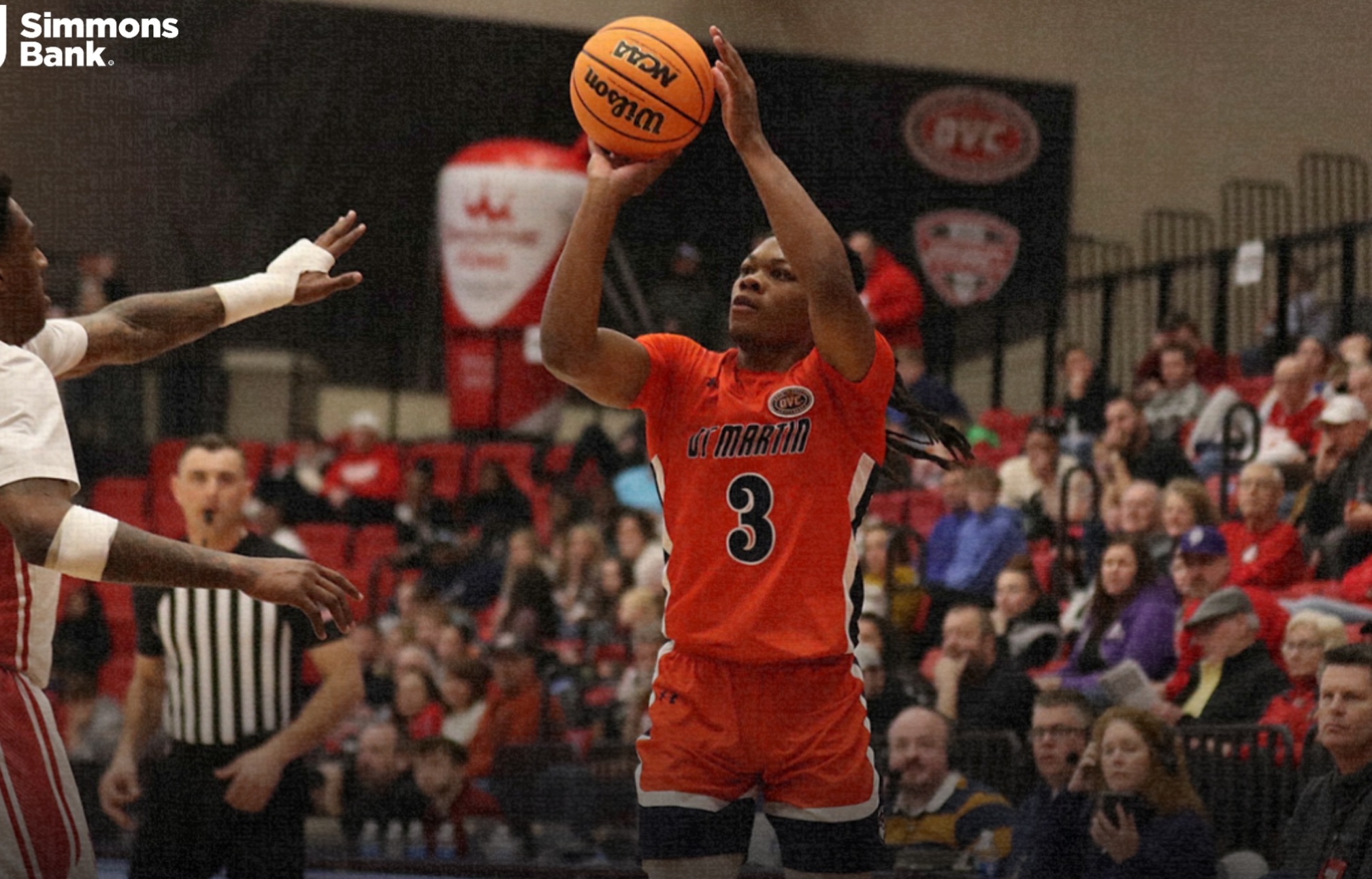
Jordan Sears joined LSU’s roster last week for his fifth and final season of college basketball, eager to take the next step in his career.
After two years at Gardner Webb and two years at Tennessee Martin, Sears has 131 games of experience under his belt and has averaged over 20 minutes per game every year of his career. Matt McMahon and LSU are looking to replace key pieces in the backcourt with Jalen Cook, Trae Hannibal, and Jordan Wright all departing. We dropped our analysis on Cam Carter yesterday, but now we get to another likely starter with Jordan Sears.
Sears immediately replaces Cook and Hannibal as LSU’s starting point guard and fits the mold of what Matt McMahon has been trying to capture at LSU from his point guard position. In year one, Justice Hill didn’t work out. In year two, Cook played 13 games. Can this be the year everything falls into place?
Here’s a look at Sears’ game and what he brings to LSU.
Dynamic scorer
Sears was one of the top 10 scorers in the country last year, ending the season at 21.6 points per game on 43.2 percent shooting from the field and 43.2 percent from three. A stat that provides a lot of clarity on his situation is his usage percentage, where Sears was 12th in the country at 32.3 percent. For context, Jalen Cook was at 30.5 percent when he played for LSU this past season. The two small point guards have very similar games and styles.
Sears is a ball-dominant player who excels in transition, isolation, and in ball screens. He utilized a ball screen on 45.1 percent of all possessions, which ranks in the 99th percentile of any player in the country, even higher than Jalen Cook (43%) last year.
When watching his game, I started at the 3-point line. On a UT-Martin team that played incredibly fast, Sears looked to shoot anytime he had space. He only attempted 5.5 threes per game, but a good amount were tough step backs, quick triggers, or from NBA range. The degree of difficulty on these 3-pointers was impressive.
He is an elite catch and shoot player at 1.27 points per attempt, but a lot of his work came off the bounce. His mid-range shooting is shaky at best, shooting sub 40 percent on mid range jumpers this year. Overall, his shot selection was shaky and will need to be cleaned up at LSU. That’s something we saw Cook struggle with, so we’ll see how Sears manages that.
Once the defense stepped up, he was ready to attack the paint. The relentless drives to the rim were really what stood out to me. Roughly 47 percent of his shots came at the rim. For a player who is 5-foot-11 on a good day, that’s a ton. He ended the year shooting 46.7 percent at the rim, which is OK, with some of those coming in transition, but also off of a switch. Sears knows how quick he is and has a great package of gathers, step throughs, and jump stops that help him get to the basket.
He also finished the year top 100 in the country in free throw rate and shot 84 percent from the line.
The big question is how will his scoring translate to the SEC? The last two small guards McMahon has brought to LSU struggled from three with Hill and Cook. Cook shot 30.6 percent from three in 10 conference games, but was an impressive 51.5 percent from two. I think LSU is well positioned to have Sears under 30 percent usage next season, and that should help his efficiency maintain some.
Passing
Another issue Cook and Hill faced at LSU was creating. Cook ended with 21 assists to 29 turnovers in 10 conference games. The ability to break down a defense without being big is certainly challenging, but the one thing he does have that Hill and Cook did not is strength. I think he’s a more powerful driver and when he puts his head down he can get to his spots well which should open up the floor for passing lanes. He ended last year 117th in the country in assist rate and in games against Mississippi State, McNeese, and NC State, held his own with a total of 50 points, 9 assists and 10 turnovers as a do-it-all point guard.
I’m not sure he’s as good of a passer as Cook, but I feel more confident about him getting to the rim and that’s a big piece in creating.
Defense
UT Martin was awful defensively, ending the year 268th in Kenpom and it was apparent they did not have any defensive personnel on the roster. They shuffled between zone and man and when I watched the NC State game Sears at least wasn’t getting picked on. Cook was a poor defender at Tulane, but held his own at LSU for the most part and I think Sears can at least do the same. He’ll certainly need help from his wings and forwards, since McMahon won’t go zone much, but hopefully he buys in and at least can stay in position.
The most important thing with these types of guards is their offense outweighing their defensive limitations. I think that is clearly the case with Sears and I’d argue when Cook was clicking that was obvious as well.
Fit at LSU
I’ve said since he signed, Sears is a Cook replacement. Remember those glimpses of how elite LSU’s offense looked when Cook was locked in last year? That’s what McMahon is trying to recreate. Between Cook, Carter, and Tyrell Ward, that’s three high-level scoring threats and enough experience and toughness that should have the Tigers punching into the top half of the SEC again.
We need to see more of Sears as a playmaker for others and a defender this season, since his whole career has been really just about scoring, but at the very least, we know he’s capable of filling it up. McMahon also has Mike Williams and Curtis Givens who offer different looks as bigger point guard options who should be utilized as well.
I’ve said it before, but this is the most talented roster McMahon has had since he arrived at LSU and there’s still one more scholarship spot remaining. The backcourt is set, though, and it’s going to be exciting to watch.
The post Transfer Analysis: Jordan Sears brings dynamic scoring to LSU appeared first on On3.