The Art Of Penalty Shootouts: World Cup Veterans Explain What Goes Into PKs
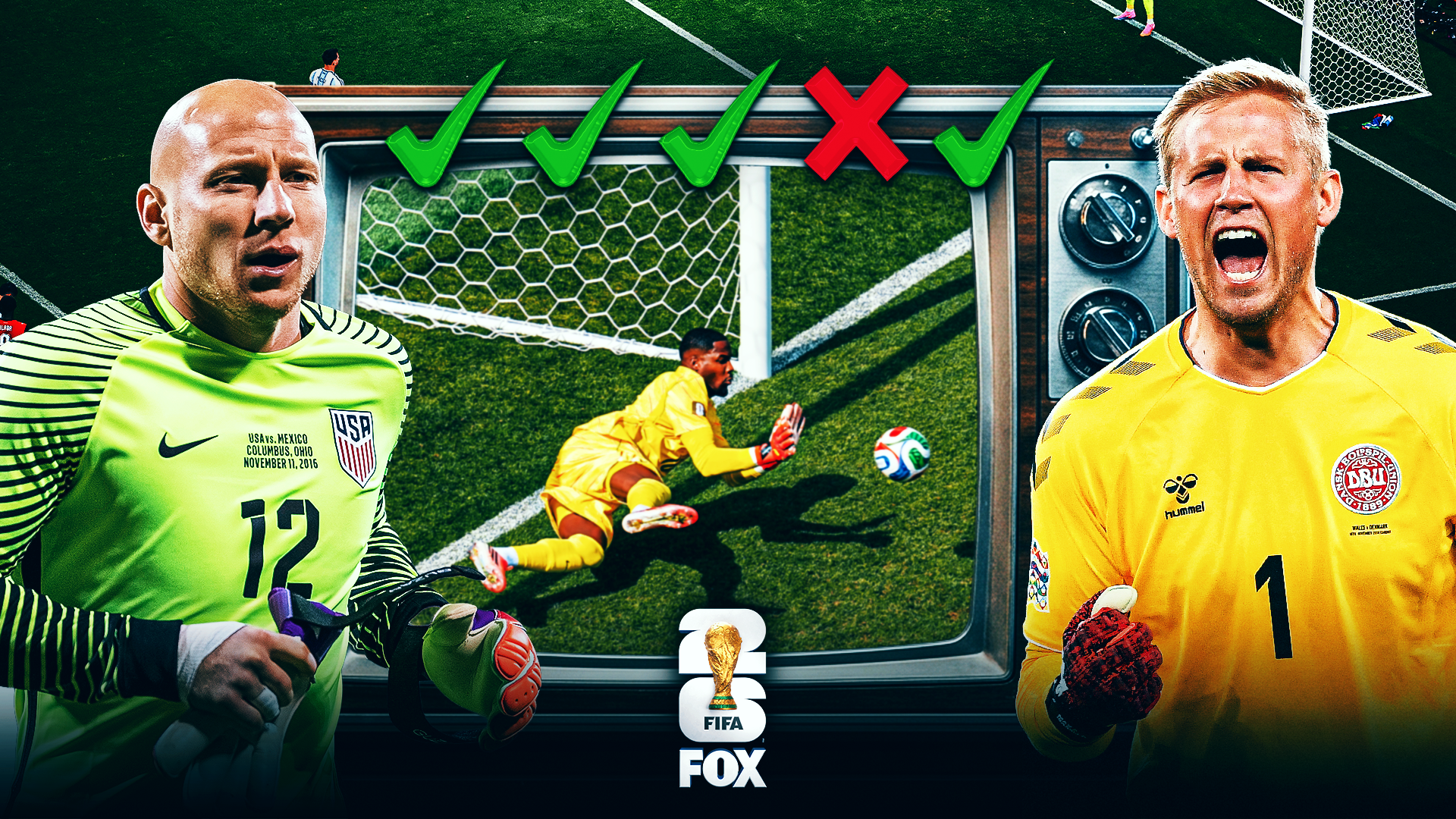
With the 2026 FIFA World Cup reaching the knockout rounds, fans will soon see 90-minute draws turn into extra time and penalty shootouts. At each of the last three World Cups, there were at least four matches decided by penalty shootouts, but in 2026, with 32 teams advancing to the knockout rounds instead of 16, that number could increase. So what is the approach for goalkeepers defending against penalty-takers in these shootouts? And what is the approach for those who take penalty kicks? We asked former U.S. men’s national team goalkeeper Brad Guzan and former Danish goalkeeper Kasper Schmeichel how they approached stopping penalty kicks. And on the flipside, we asked former U.S. men’s national team star forward Clint Dempsey what goes into making a penalty kick in a high-pressure moment. Here’s how they break down penalty kicks in a step-by-step process. Preparation Well before any penalty kicks are taken, several hours of preparation are put into stopping or converting them. However, Guzan admitted that he always felt “the pressure was on the penalty-taker.” Still, Guzan, who was on America’s roster at the 2010 and 2014 FIFA World Cups and spent nine seasons with MLS club Atlanta United after a nine-year career in England, always felt supremely prepared for penalty shootouts. Before the start of a penalty shootout, he’d meet with the goalkeeper’s coach, study his opponents and put himself in a position to succeed. “You’ve done your research, you’ve done your homework leading up to the game,” Guzan said. “You’ve got a list, a piece of paper with their names and their tendencies. That gives you that little reminder, and then, go for it.” Defending a penalty shootout is similar to being an infielder or outfielder in baseball and reading your positioning card before each batter steps onto the plate. A hitter can beat a shift, similar to how a penalty-taker can stray from their normal strategy, but following the history, the film, the research best prepares a goalkeeper. “At that point, you trust in your gut, you trust in what you’ve seen. And if you go the right way, you hope that you’ve put yourself in a position to make a save,” Guzan said. Trusting the preparation is key, Guzan explained, emphasizing that once a goalkeeper chooses a side to dive to, they have to commit. Mind Games When it actually comes time for penalty kicks, there’s another advantage that goalkeepers have, according to Guzan: playing mind games. Guzan said he wouldn’t trash-talk penalty kickers, but he would certainly ice them. “I was a delay guy. Talking to the referee, getting a sip of water. I’m touching the post over there, I’m touching the post over here.” That strategy, however, is much harder to implement at the 2026 FIFA World Cup, where there are rules to ensure the game flows smoothly, where officials have awarded corner kicks when goalkeepers take too long to take a goal kick, and issued cards for wasting time. So, that’s why some other goalkeepers take their preparation and mind games to an extra level. Former Denmark and Leicester City goalkeeper Kasper Schmeichel shared that the teams he was a part of would seek the help of a mentalist to try and get an extra advantage in penalty kick situations. “For me, it was always about control,” Schmeichel said. “We actually used a mentalist, a guy that guesses things that you’re thinking, but they’re putting it in your head. So, we actually asked one of those to see what we can actually do to influence a taker, and it would be things like overemphasizing certain words. “In a VAR situation, when the referee is out checking, I had a chance to talk to the taker. I’d overemphasize words like over or right or left, or try to do different things that they kind of taught us to look for. Can I get some kind of influence?” Another challenge for goalkeepers is the introduction of late-game substitutes, or a penalty shootout going longer than five attempts. That can lead to penalty-takers who have few attempts on their record, and therefore, no concrete tendencies. In the end, Guzan said, it’s important to “trust in what you’ve already done,” and “commit and go.” The Run-Up Now, the ref has blown the whistle and it’s time for the taker to step up to the ball for the kick. When Dempsey would take his first steps toward the ball, there was one move he would make that he thought gave the penalty kick taker an advantage. “To me, you stutter step to see if the keeper is going to go early,” Dempsey said. “If the keeper doesn’t go early, then you have to be precise. And you know in your mind where you like to go in those scenarios. There are times when you see the keeper bite, and then you’re able to change it up. I think different strokes for different folks.” With penalty takers like Dempsey admitting that they tried to get the goalkeeper to move early, Guzan admitted that stopping penalty shots was “all about timing.” “The timing to explode and the timing to go with whatever side you decide, left or right,” Guzan said. “You want to go with everything you have. When you stutter, that timing becomes really difficult to make sure you don’t go early.” The Attempt Ultimately, the vast majority of penalty kicks are determined by how the ball comes off the taker’s foot. Will the taker aim for the far posts? Will he or she aim for the middle of the net? Do you put some umph on the shot to power it past the goalkeeper or do you bounce it in? Dempsey said that the best takers have to weigh everything and be able to make penalty kicks in form or fashion. “You have to mix up how you do your penalty kicks. You have to be willing to chip down the middle and not do the stutter step,” Dempsey said, adding, “If you’re going to be the most complete penalty taker, you have to have an array of ways in which you take it.” And on the keeper’s end, Guzan continued to emphasize the importance of timing, believing that the slightest difference in reaction time could determine if the ball goes in or is saved. “The timing then has to be so precise,” Guzan said. “Even then, if the ball is far enough in the corner, it becomes really difficult to save, knowing that you’ve got to be at full extension to get even the slightest fingertip to get it on the post or around the post.” The Result Hours of preparation and studying are behind every penalty kick. Moments of intense thinking precede each try, too. All of those little things helped Dempsey make 16 penalty kicks on 21 attempts in his club and international career (excluding penalty kick shootouts). For Guzan, he saved 17 of the 71 penalty kicks he faced in his club and international career (also excluding penalty kick shootouts). But all of that time and thinking might not matter in the end, at least on the goalkeeper’s side. “We had faced a penalty against Peru in the World Cup 2018. I kept overemphasizing the word over, ‘Don’t hit this over,’ all these kinds of things, emphasizing the word over,” said Schmeichel, who saved 26 of 99 penalty shots he faced over his career (excluding penalty kick shootouts). “Whether it made a difference, I don’t know.”