Key defensive numbers D’Anton Lynn must bring from UCLA to USC
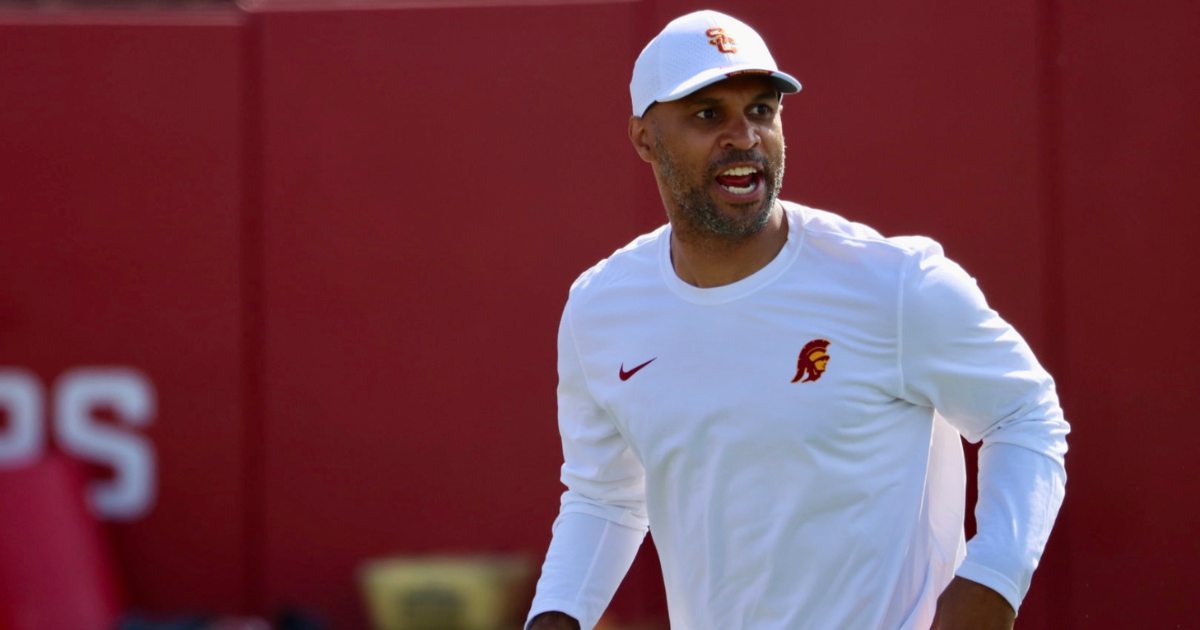
There’s really no secret when it comes to this 2024 USC Trojans football team finding success in its first season in the Big Ten. You’ve undoubtedly heard it all spring and summer (Technically, you’ve heard it for years at USC). Address the defense. Fix the defense. Play good defense. Invest in the defense. Whatever the exact phrase, the way Lincoln Riley’s program can compete nationally always boils down to the same idea: put a strong defense on the field.
It’s tough to argue with many of the steps taken so far this offseason. The defensive staff Riley put together is tremendous on paper. USC also brought in potentially half its starting defense via the transfer portal. Now, it’s about getting that entire group to produce on the field.
The bar to clear when it comes to past USC defenses should be an easy one to clear. If Michael Jordan can tell North Carolina fans “the ceiling is the roof” regarding their basketball program, USC fans can probably hear “the floor is the basement” when it came to how bad things got under Alex Grinch.
It might not be fair to Lynn to expect the exact same defensive turnaround he provided at UCLA last season. But that is absolutely the goal for a USC defense that seemed to finish in the triple digits of just about every important defensive statistical category last year.
Where can the Trojans start when it comes to finding the same kind of defensive success the Bruins enjoyed under Lynn? Surprise, surprise. Stop the run.
According to numbers from Sports Info Solutions, UCLA was among the best programs in the Power 4 conferences when it came to rush defense using any type of formation or personnel. Comparing UCLA’s success against USC’s futility in a few key areas paints a clear picture of not only the gigantic gap between the two programs last year, but where Lynn specifically might be able to close it this year.
With six or fewer defensive players in the box last year, UCLA ranked No. 5 among Power 5 programs last season in yards per attempt at 4.1 (down from 4.77 the previous year). That ranked just behind Texas, Penn State, South Carolina and Iowa, and just ahead of Michigan. For comparison, USC allowed 6.2 yards per carry with six or fewer defenders in the box. And while the Trojans had 245 snaps with six or fewer defenders in the box, UCLA took just 187 in the same 13 games. And the 1,540 rushing yards USC opponents had on those carries were about 500 more than UCLA allowed all season.
The Bruins also found plenty of success against the run when they stacked the box as well. With seven or more defenders in the box, UCLA ranked No. 3 among all now-Power 4 teams in fewest yards before contact, with 0.8 yards. Texas A&M and Nebraska were the only teams better than UCLA. In 166 carries against seven or more in the box, Lynn’s UCLA defense allowed 72 yards before contact. That represented a per-carry drop for UCLA from 1.79 in 2022 to .43 in 2023.
In 232 carries against Grinch’s USC defense that had seven or more in the box, opponents gained 427 yards before contact.
And that early contact rate carried over no matter how many players Lynn stacked in the box. Among all 18 Big Ten teams, only Penn State defenders contacted running backs at or behind the line of scrimmage more often than UCLA’s. The Bruins did it on 50.2% of run plays.
UCLA’s 2023 schedule doesn’t match up well with USC’s 2024 slate, and Lynn might have taken over a UCLA roster that was a bit more proven along the defensive line. But these numbers show a coaching ability and a scheme that can absolutely have the first-year effect on a USC defense that Riley needs in his program.
The post Key defensive numbers D’Anton Lynn must bring from UCLA to USC appeared first on On3.